


Nicole, Tim, and many others are already raving about our products
Small Competition Kettlebell
Small Competition Kettlebell
 Learn the Turkish get-up cleanly, step by step
Bottoms-up and armbar: control over strength
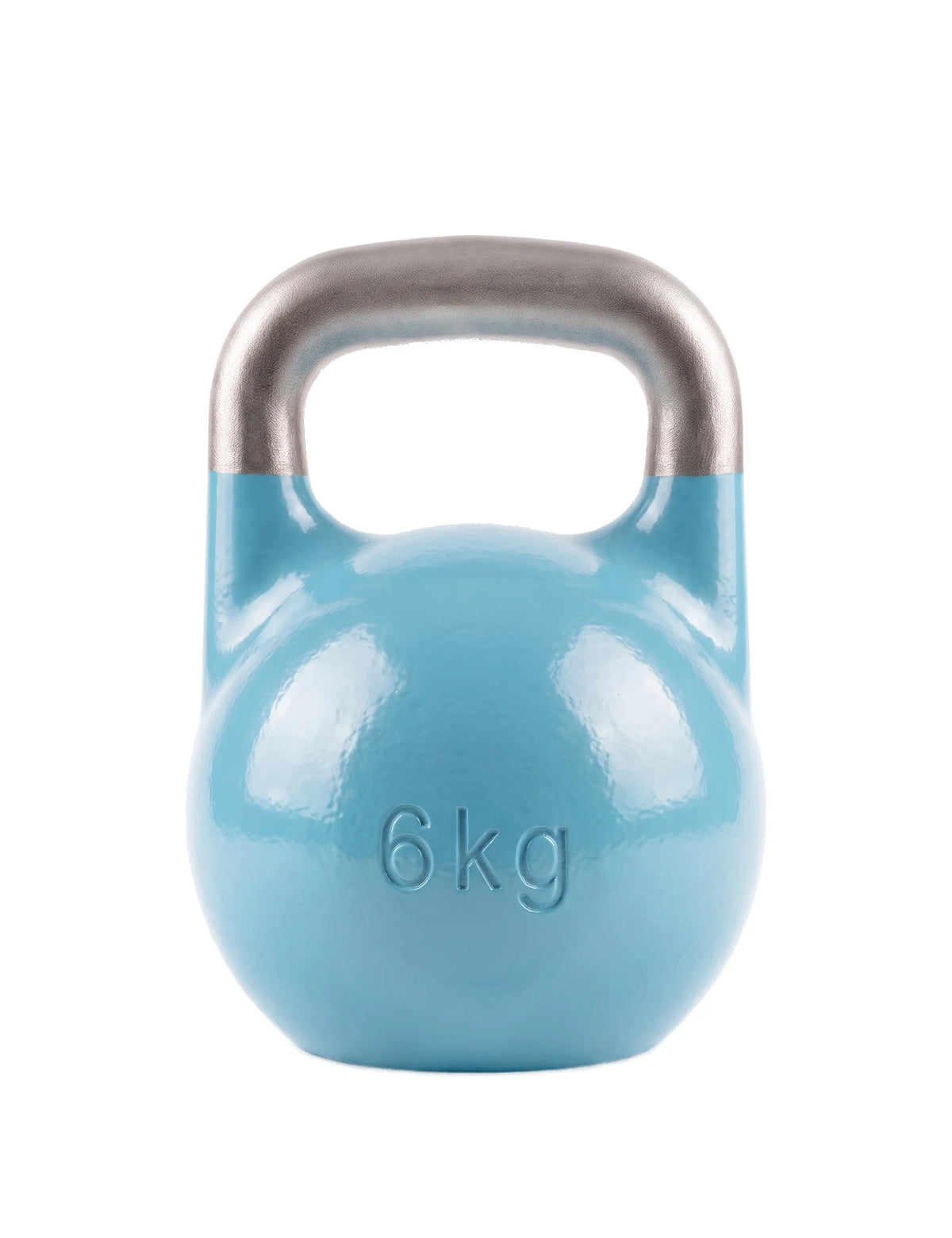
Progress cleanly – first 4 kg, then 6 kg
For classes where beginners train alongside

Couldn't load pickup availability
Perfect match
Complete your setup
Usually ready in 24 hours
Small Competition Kettlebell
Gewicht (Produkt): 4kg
-
cross equip Schweiz
Pickup available, usually ready in 24 hours
Schanzstrasse 1
8330 Pfäffikon ZH
Switzerland+412160746


Description
4 kg and 6 kg kettlebell for get-ups, shoulder and mobility
In a Turkish get-up you go from lying down to standing and back again, and every step in between has to be clean. The Small Competition Kettlebell gives you 4 or 6 kg for that: you feel the load, but you have enough in reserve to fine-tune the sequence. The same goes for bottoms-up holds: the handle points down, the bell up, and even 4 kg demands a lot of control from your shoulder and forearm. Both weights also work well for halos, armbars and mobility exercises around the shoulder.
As a coach or personal trainer, you get light weights for classes where not everyone is swinging 16 kg. Our full-size competition kettlebells start at 8 kg, and the Small Competition Kettlebell covers the two steps below. Want to start even lighter? There's the Mini Competition Kettlebell with 2 kg.
4 or 6 kg – how to choose
4 kg is what you take when you're learning a sequence for the first time: the individual phases of the get-up, your first bottoms-up hold, armbars on the floor. This is where you fix mistakes before they become habits.
6 kg is next once your get-up flows and you want to consolidate it under more load. For windmills and single-arm overhead presses, it's also a good starting point for many beginners.
In a class, it's best to put out both. Newcomers start with 4 kg, those who have the exercise down move up to 6 kg – so the whole group trains the same exercise at the right weight.

Which kettlebell fits you?
Competition, cast iron or adjustable — the build decides whether your grip stays the same when you change weight. Here you find the right bell and the weight to start with.
Technical Specifications
| Weights | 4 kg, 6 kg |
|---|---|
| Colour (4 kg) | Yellow |
| Colour (6 kg) | Light blue |
| Shape | Competition shape |
| Bell | Painted |
| Handle | Bare, shot blasted, unpainted |
| Handle diameter | 28 mm (4 and 6 kg) |
| Bell diameter | 135 mm (4 kg), 140 mm (6 kg) |
| Handle width (inside) | 100 mm at the top, 95 mm at the bottom |
| Unit | 1 piece |
| Packaging | Individual box with foam insert |
Small Competition Kettlebell vs. Hollow Competition Kettlebell
| Criterion | Small Competition Kettlebell | Hollow Competition Kettlebell |
|---|---|---|
| Weights | 4 and 6 kg | 8 to 48 kg in 17 steps |
| Colours | Yellow and light blue, own logic | Colour code of the full-size competition kettlebells, yellow stands for 16 kg |
| Strong at | Turkish get-up, bottoms-up holds, shoulder and mobility, light classes | Swings, cleans, snatches, kettlebell sport, WODs |
| Progression | Two steps, then move up to 8 kg | Fine increments up to 48 kg |
For get-ups, shoulder training and classes with light weights, the Small Competition Kettlebell in 4 or 6 kg is all you need. When your swings and snatches need more weight, move up to the Hollow Competition Kettlebell, which starts at 8 kg. In a gym, the two complement each other.
Frequently Asked Questions
How heavy should a kettlebell be – are 4 or 6 kg enough?
Can I do swings with 4 or 6 kg?
How many kettlebells do I need for a class?
Small Competition or Cast Iron Kettlebell?
What comes after 6 kg?
Why is the 4 kg kettlebell yellow?
Customer reviews
For a long time, our competition range started at 8 kg. For your first Turkish get-up, that's a lot – you end up fighting the load instead of learning the sequence. With 4 and 6 kg you learn the steps calmly – and when you move up to 8 kg afterwards, you already know the competition shape.

Further information
Additional informations
- Brand
- cross equip
- Weight
- 4.5 kg
Shipping & Delivery
Our parcel delivery partners:
Small and lightweight parcels are delivered by Swiss Post. We ship larger and heavier parcels via DPD.
Our shipping partner
For larger shipments that need to be transported by truck on pallets, our shipping partner Christian Rüedi AG ensures on-time and damage-free delivery.
Freight deliveries are kerbside only: the driver sets the pallet down at the roadside in front of the delivery address. He does not carry the goods into the building, the basement or your training room.
We offer reliable and fast shipping so you receive your order as quickly as possible.
- Delivery times: In-stock items shipped by parcel usually reach you within 1–2 working days, and as a rule within 4 working days at the latest. Pallet shipments are usually delivered by our freight partner 2–3 working days after receipt of payment. All lead times run from receipt of payment.
- Shipping costs: Shipping costs vary depending on the order quantity and delivery address. These are clearly and transparently displayed at checkout.
- Tracking: After your order has been shipped, you will receive a tracking number via email, which you can use to check the status of your delivery online at any time. Delivery areas: We deliver to Switzerland and Liechtenstein.
- Returns and exchanges: If you are not satisfied with your order, we offer a hassle-free return and exchange policy. Please read our return policy for more information.
- Our customer service team is happy to assist you with any questions or special requests.